Making Art Together Is How We Find Our People
Art/love/life (which is all the same thing in my book) is the thread that weaves community together. And we need community to survive, but not all communities are made equal. There are ones that help you survive by providing that basic human need of companionship and support, then there are ones that help you thrive. The difference is in how it makes you feel.
When you are in community, do you feel a slight bit tighter, more constricted, like there’s something at stake? Or do you feel open and relaxed, maybe energized even, because you can just be your regular weird potentially annoying self? The difference is are you trying to be one of the gang or are you right at home? As Brene Brown says, “The greatest barrier to belonging is fitting in.” Art is a catalyst to creating communities like the last one I described, where there is a sense of belonging, a nudge toward evolving.
Making art together does a lot of things. First of all, it’s fun, if you can get over feeling like you are not an artist, because you are. Also, it does something to us chemically. When we create alongside other people, our brains release oxytocin, the same bonding hormone released during physical touch and deep conversation, among other things. Most people don't know this is happening, but they feel it.
The Ancient Roots
We've known this in our bones since the stone age. Humans have always made things together. We've been building, cooking, dancing, and gathering in ceremony, even back when we were in caves. As Susan Magsamen and Ivy Ross write in Your Brain On Art, "Around the fire, creative human expression developed as an important layer of meaning-making and belonging." It's wired into us. It feels good. It's part of how we are meant to form community, because we are here to create after all!
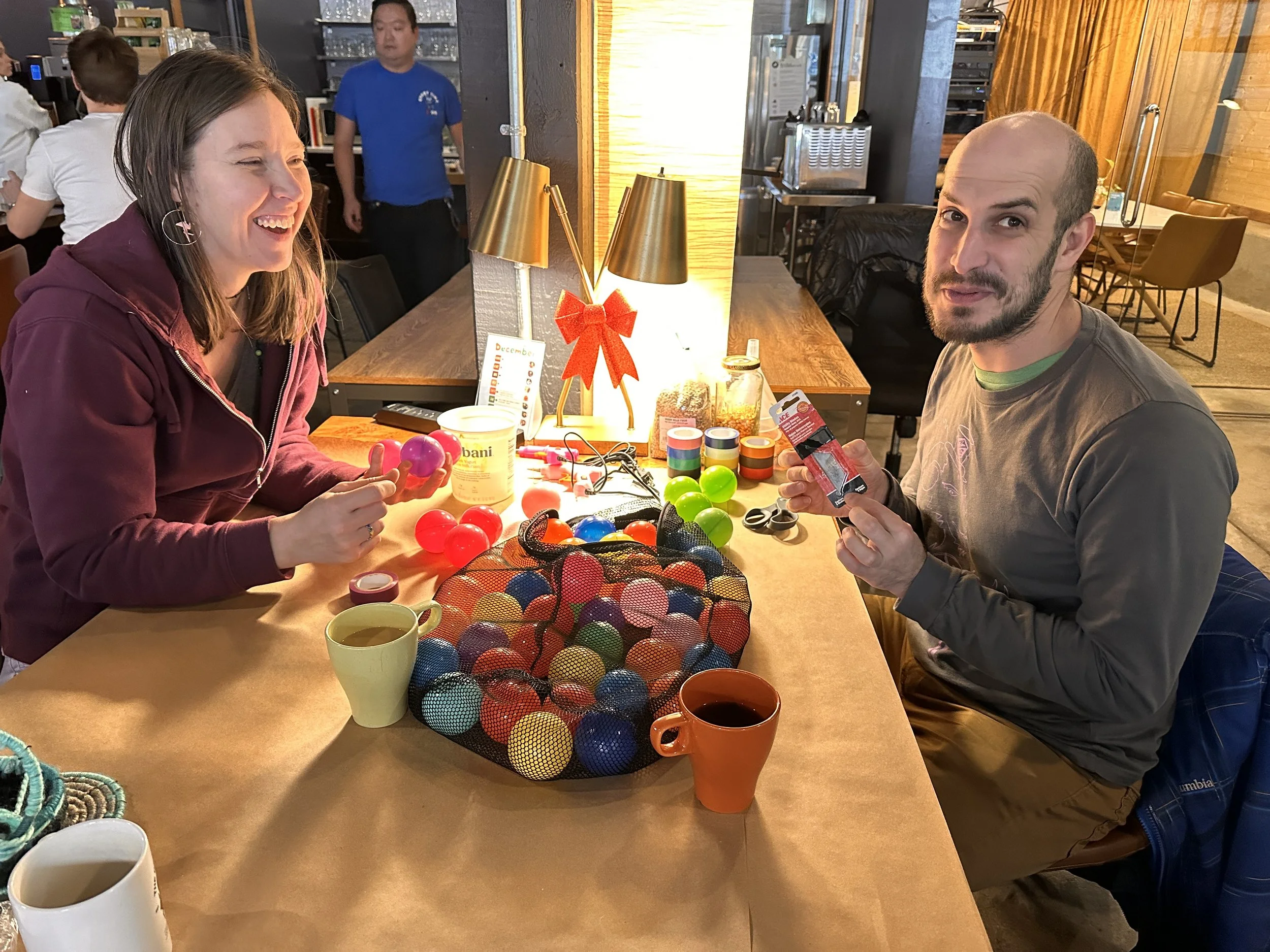
A couple of folks at Creative Release Open Studio one Saturday.
What We’ve Lost
Modern life has largely separated making from community. Art became something done alone, or something you watch others do. One great thing about the pandemic times is folks had time to pick up hobbies and started crafting and painting and making bread. We could watch a video on how to do just about anything without needing to go to a class or join a group, and people sort of got used to that. We lost the experience of creating together as a regular part of life, and all of the amazing magic that comes with it. I know this because I've spent the better part of my life watching it happen.
I’ve Seen Some Stuff
I’ve been working in, on, and around community-based art projects for a very long time, and had the chance to see first hand how that magic can dazzle. In the early 2000s, I had the sublime pleasure of working with folks at 826 Valencia in San Francisco. This incredibly playful and creative environment opened my eyes to the possibilities of immersive community-based art-making. Over a decade later, I began creating community-based art installations in Lancaster, PA., when a friend and I opened a storefront art studio and event space called Modern Art. Our projects, infused with play and humor, invited people to question the status quo and have a little fun along the way.
After a few years, I joined the City of Lancaster's Office of Public Art. There, I focused on neighborhood-based initiatives, using art as a bridge to build a healthy community. By fostering empathy and accessing the light within us all, creativity and art become powerful entry points to belonging. It’s just true that when people make things together, something shifts between them.
An Invitation
Psychologists Roy Baumeister and Mark Leary argue that belonging is as essential as food and shelter. If that's true, and I believe it is, then the quality of the communities we choose matters enormously. I'm going to be exploring what that shift is, why it happens, and how to bring more of it into your life, because we are only here once with this wild and precious life, so why waste time trying to fit in?
<><><><><><>